Technical infrastructure due diligence is now standard in Series A rounds for AI startups. Investors evaluate model governance, deployment pipeline maturity, observability coverage, and cost structure at scale. Learn what they find and how to be ready.
Series A investors now include technical infrastructure due diligence as a standard part of their process. They evaluate model governance, deployment pipeline maturity, observability coverage, cost structure at scale, and whether the founding team has built infrastructure that can support the growth they are promising.
The conversation about fundraising for AI startups has changed since 2023. Product traction still matters. Team quality still matters. Market size still matters. But a new category of scrutiny has arrived in diligence: the technical infrastructure review.
Investors writing Series A checks into AI startups have seen enough production failures to know that a demo that works and a product that scales are different things. They are now paying for people to look at your actual infrastructure, not just your architecture deck.
The founders who are preparing for this are raising faster and at better terms. The founders who discover the scrutiny for the first time during diligence are losing deals or losing weeks.
What Specifically Do Technical Due Diligence Teams Evaluate?
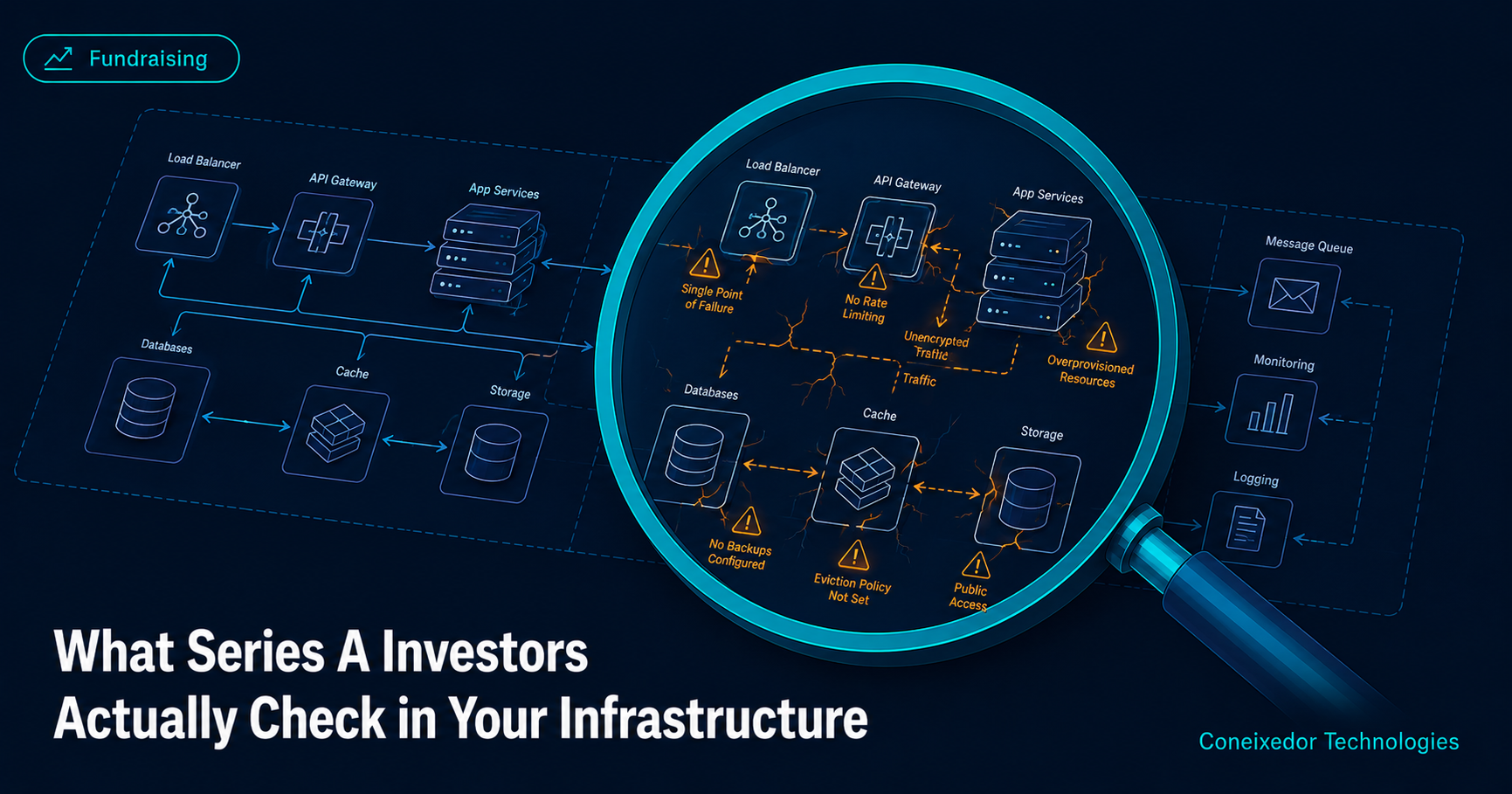
Venture capital due diligence for AI startups now evaluates not just traditional business fundamentals but also data quality, model governance, and operational infrastructure maturity. The specific areas are:
Model governance. Is there a documented process for how model versions are selected, tested before deployment, and monitored after deployment? Teams that have shipped a model and are watching it passively will be flagged. Teams with a formal governance layer demonstrate operational maturity.
Deployment pipeline maturity. How frequently does the team deploy? How long does rollback take? Is there behavioral testing in the pipeline or only syntax testing? A pipeline that generates fear rather than confidence is evidence of technical debt that will compound with scale.
Observability coverage. What can you see about your system when it is misbehaving? Investors want to see monitoring across the infrastructure layer, the model behavior layer, and the retrieval layer. A startup that cannot observe its own system cannot operate it at the next order of magnitude.
Cost structure at scale. What does your infrastructure cost at 10x current users? The honest answer requires a genuine analysis of your inference architecture, not an extrapolation of your current cloud bill. Technical investors model this. Founders who have not modeled it themselves are at a disadvantage.
Security and data governance. AI tools incurred over 4.2 million data loss violations in 2025 according to reported security incidents. Investors assess whether your handling of user data through model pipelines meets the contractual standards your customers expect.
What Happens When Infrastructure Fails Due Diligence?
The outcome is not always a failed raise. Sometimes it is a reduced valuation. Sometimes it is a longer diligence process. Sometimes it is a conditional close that includes infrastructure remediation milestones. In each case, you have less leverage than if the infrastructure had been ready before the raise began.
The failure scenarios my team addresses reflect this pattern. An AI startup managing a hospital contract had infrastructure debt that had not yet caused an incident. The potential consequences were visible in diligence and nearly cost the client their most significant contract. My team established an SRE practice, reduced incident frequency by 70%, and brought resolution time from four hours to under five minutes. The contract was retained.
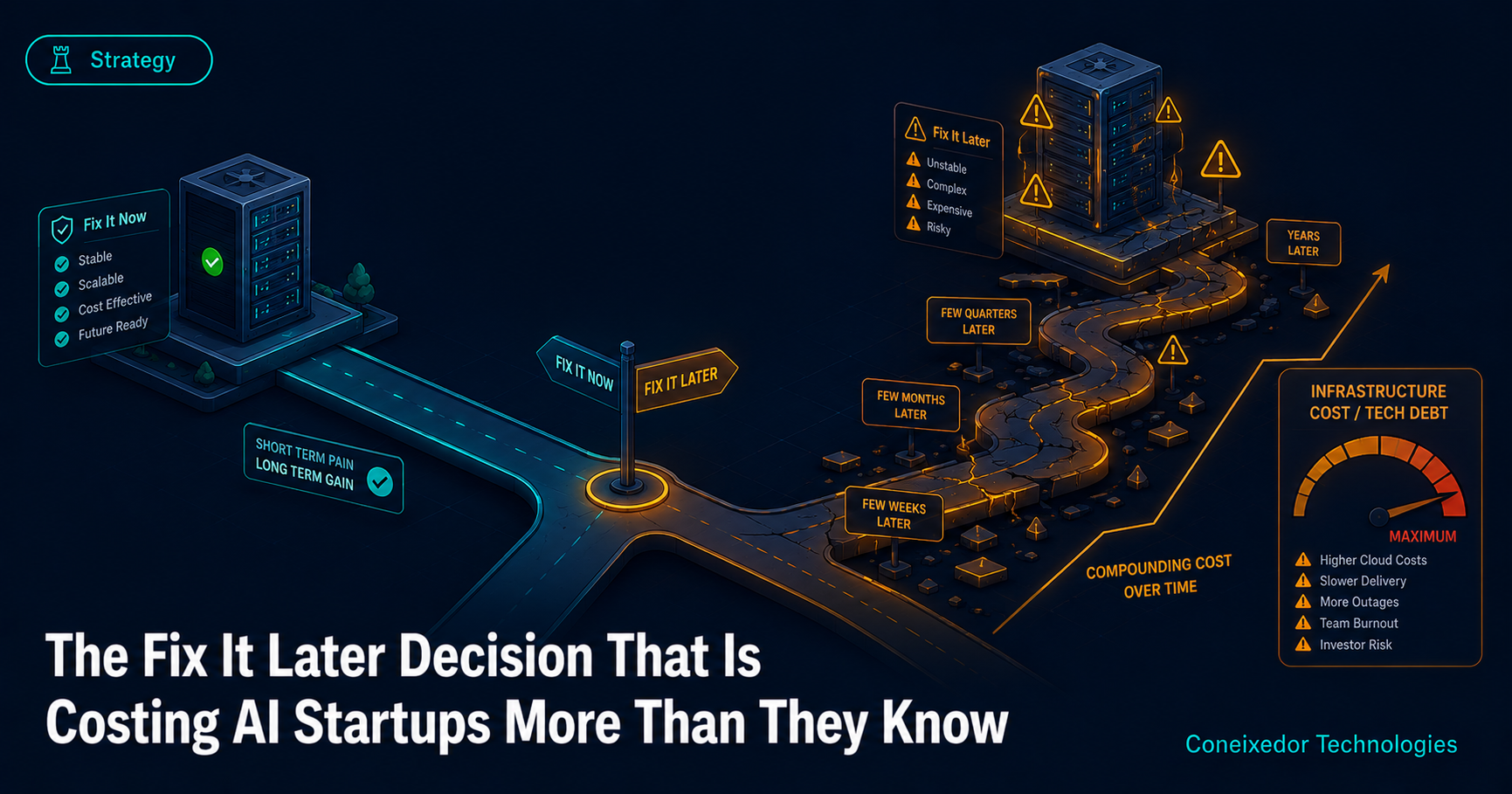
The cost of addressing infrastructure debt before diligence is a fraction of the cost of addressing it during.
What Is the Right Preparation Timeline Before a Series A?
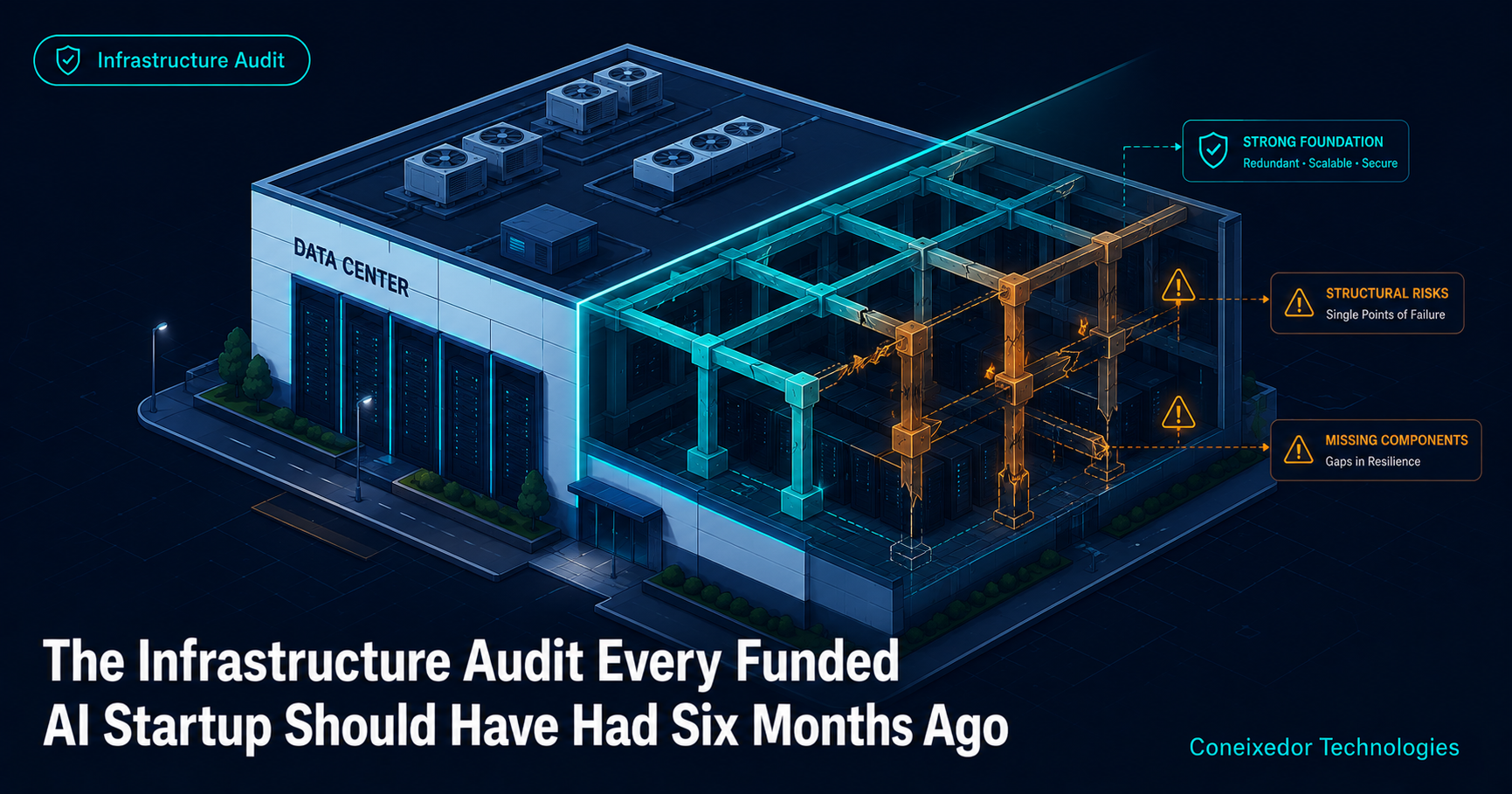
Six months before your target raise date is the minimum useful window. It takes two to four weeks to conduct a thorough infrastructure review and produce a clear picture. It takes four to eight weeks to implement the highest-priority remediations. It takes four to six weeks to accumulate the operational data that demonstrates the improvements to a technical investor.
The teams that have the strongest diligence performance are not the teams that fixed everything. They are the teams that know exactly what they have, have addressed the critical risks, and can speak to their infrastructure posture from a position of understanding rather than hope.
Coneixedor's Pre-Fundraise Pack includes an expedited infrastructure review, a remediation engagement, and a Due Diligence Response Document structured for technical investor review.
What Does a CTO Say to a Diligence Team That Has Found Infrastructure Gaps?
The worst answer is that you did not know. The best answer is that you knew, you have a prioritized remediation plan, and you have already addressed the critical items. The difference between these two answers is preparation, and preparation starts with a thorough self-assessment before an investor is looking.
CTOs who go into diligence having already done the hard thinking about their infrastructure come out of diligence with their credibility intact regardless of what the review finds. Credibility in diligence is leverage at the negotiating table.
Book Your Free Infrastructure Reality Check to understand your current diligence posture and what an investor would find if they looked at your infrastructure today.
Frequently Asked Questions
Yes. Technical due diligence on AI infrastructure is now standard in Series A and Series B rounds for AI startups. Investors evaluate model governance, deployment pipeline maturity, observability coverage, and cost structure at scale. Teams that have not addressed their infrastructure debt before diligence discover it under high-stakes conditions.
The most commonly flagged issues are absence of model monitoring, deployment pipelines with high rollback time, lack of behavioral testing, inadequate observability coverage, and inference cost structures that do not scale sublinearly with growth. Each of these can be addressed before a raise begins if the startup acts early enough.
At minimum six months before your target close date. This allows time for the review, remediation of critical findings, and accumulation of operational data that demonstrates the improvements. Infrastructure reviews conducted during diligence are reactive and high-cost, and give you far less negotiating leverage than being prepared in advance.
A thorough infrastructure reality check covers architecture, deployment pipeline maturity, observability coverage, model governance, cost structure analysis, security posture, and specific risks that would be visible to a technical due diligence team, structured for investor review.