Most funded AI startups have significant infrastructure debt they are unaware of because no expert has ever systematically examined their production environment. Learn what a proper AI infrastructure reality check covers, what it typically finds, and what happens after.
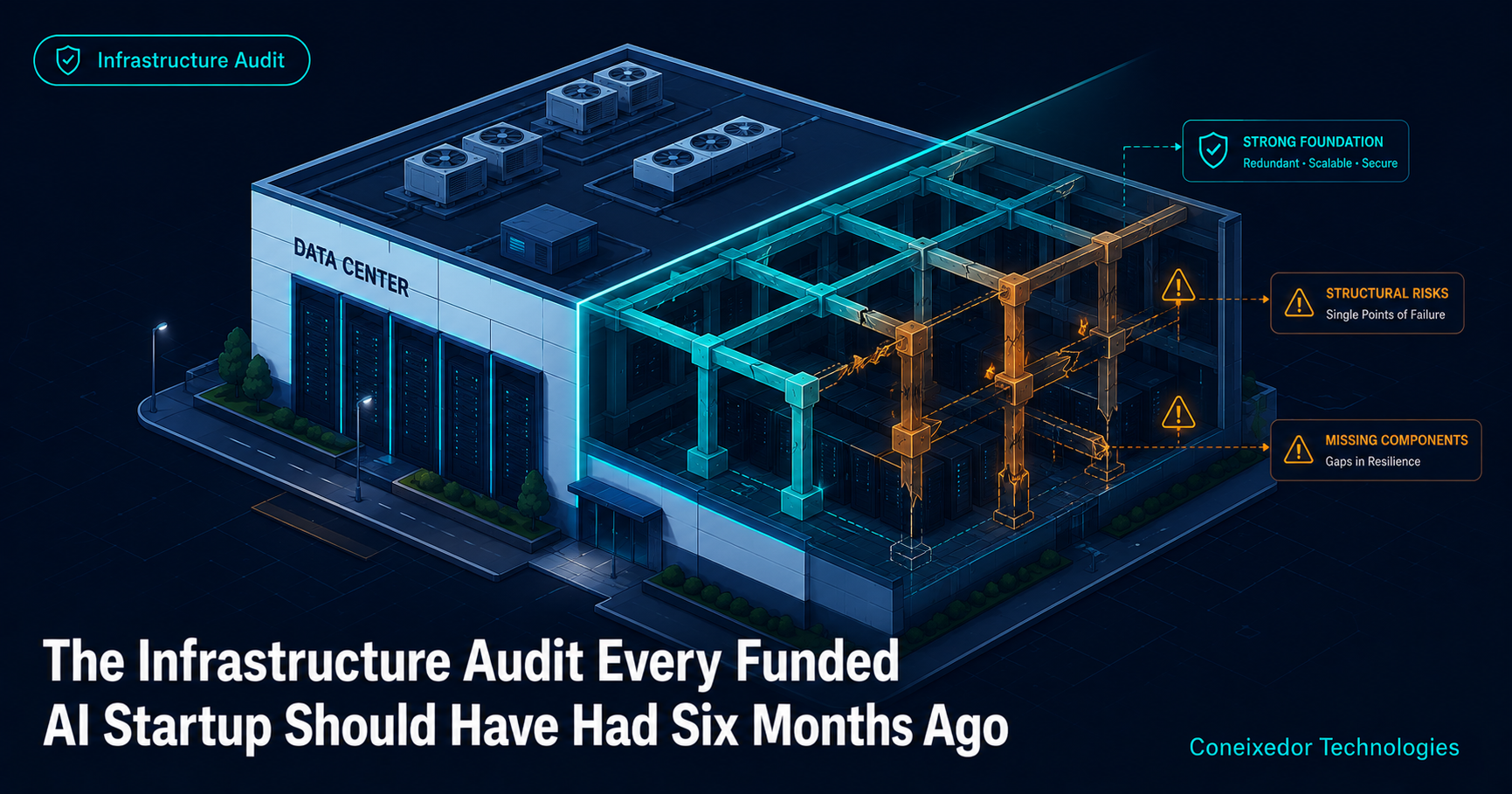
Most funded AI startups have significant infrastructure debt they are unaware of because they have never had an expert systematically examine their production environment. An infrastructure reality check creates a clear, prioritized risk picture that the founding team can act on before those risks become incidents.
There is a specific moment in the life of a funded AI startup when the infrastructure conversation needs to happen. It is not after the first major outage. It is not during due diligence. It is when the startup has product-market fit and a growing user base, and the team is focused entirely on growth.
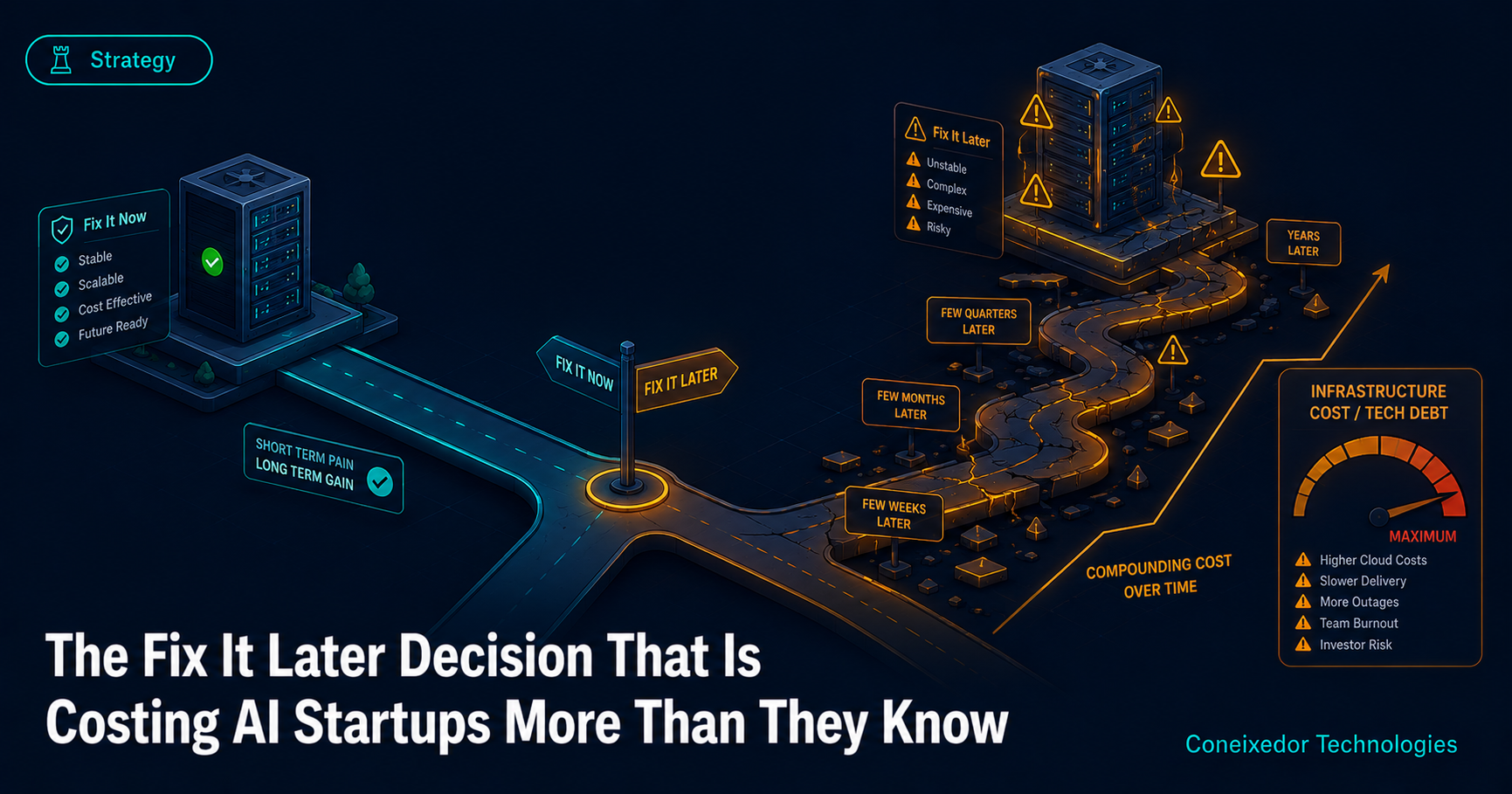
This is the moment when infrastructure debt compounds silently. The codebase is moving fast. The team is adding features. Nobody is asking hard questions about what happens to the system under ten times the current load.
An infrastructure reality check is the hard question, asked systematically and answered directly.
What Does an AI Infrastructure Reality Check Actually Cover?
Most teams have a mental model of their infrastructure. They know roughly where things are, which parts have been under-invested, and which components have been deferred for rebuilding when there is time. A reality check converts that mental model into a clear, prioritized, externally verified picture.
My team reviews eight technical areas on every engagement:
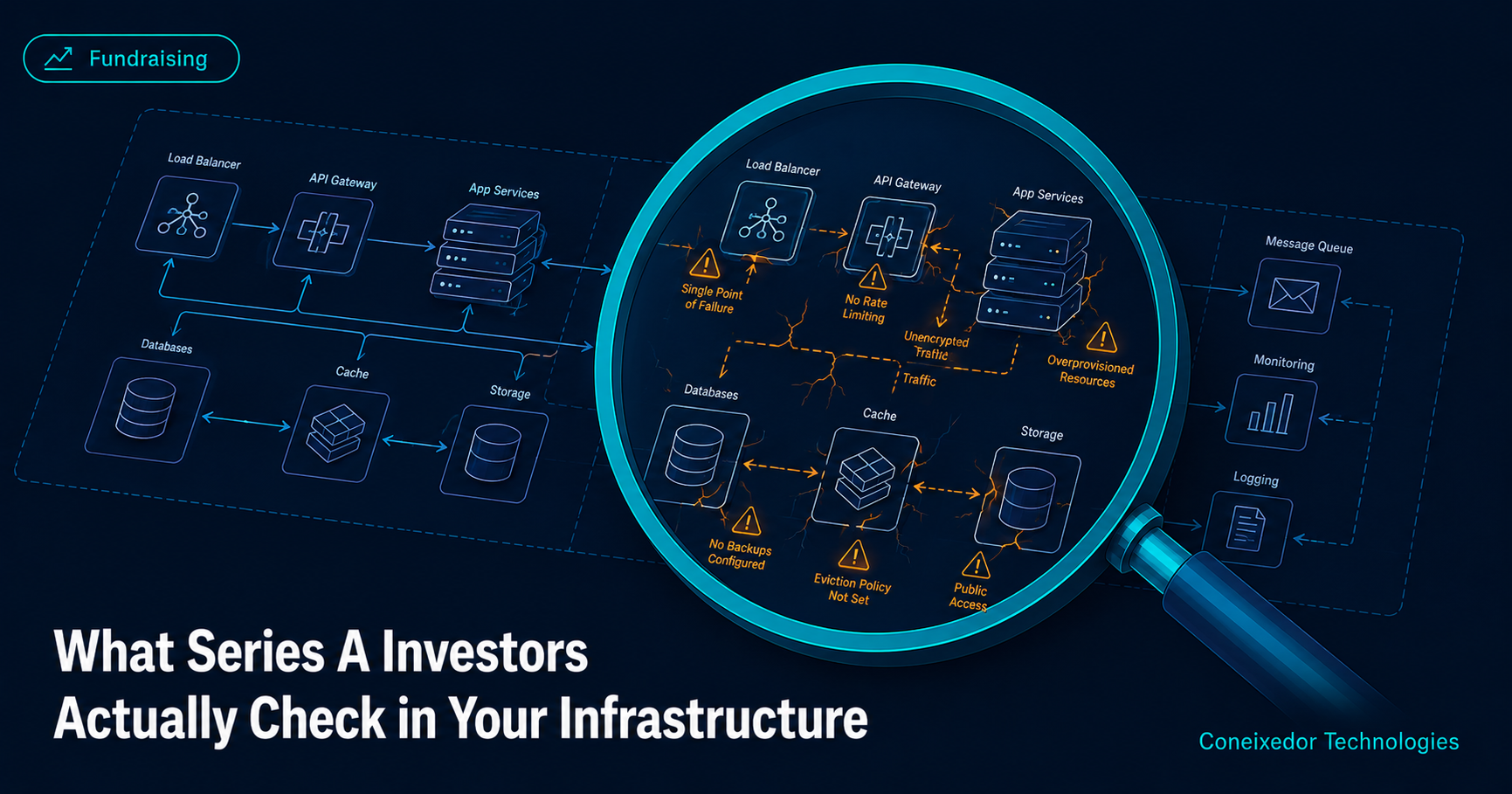
Current architecture assessment. Is the system designed for the scale you are targeting? Are there single points of failure? Are component dependencies creating brittleness that will not survive 5x growth?
Deployment pipeline maturity. How does code get from engineer to production? How long does rollback take? What validation happens between commit and deployment, and does any of it validate model behavior?
Observability coverage. What can you see when something goes wrong? Is there instrumentation across the infrastructure layer, the model behavior layer, and the retrieval layer, or only across the first?
AI-specific risk assessment. Model drift exposure, RAG retrieval reliability, inference cost structure, and provider dependency risk: the failure modes specific to AI products that a traditional infrastructure review will miss.
Security posture. Data handling through model pipelines, access controls, secrets management, and compliance gaps relative to your customer contracts.
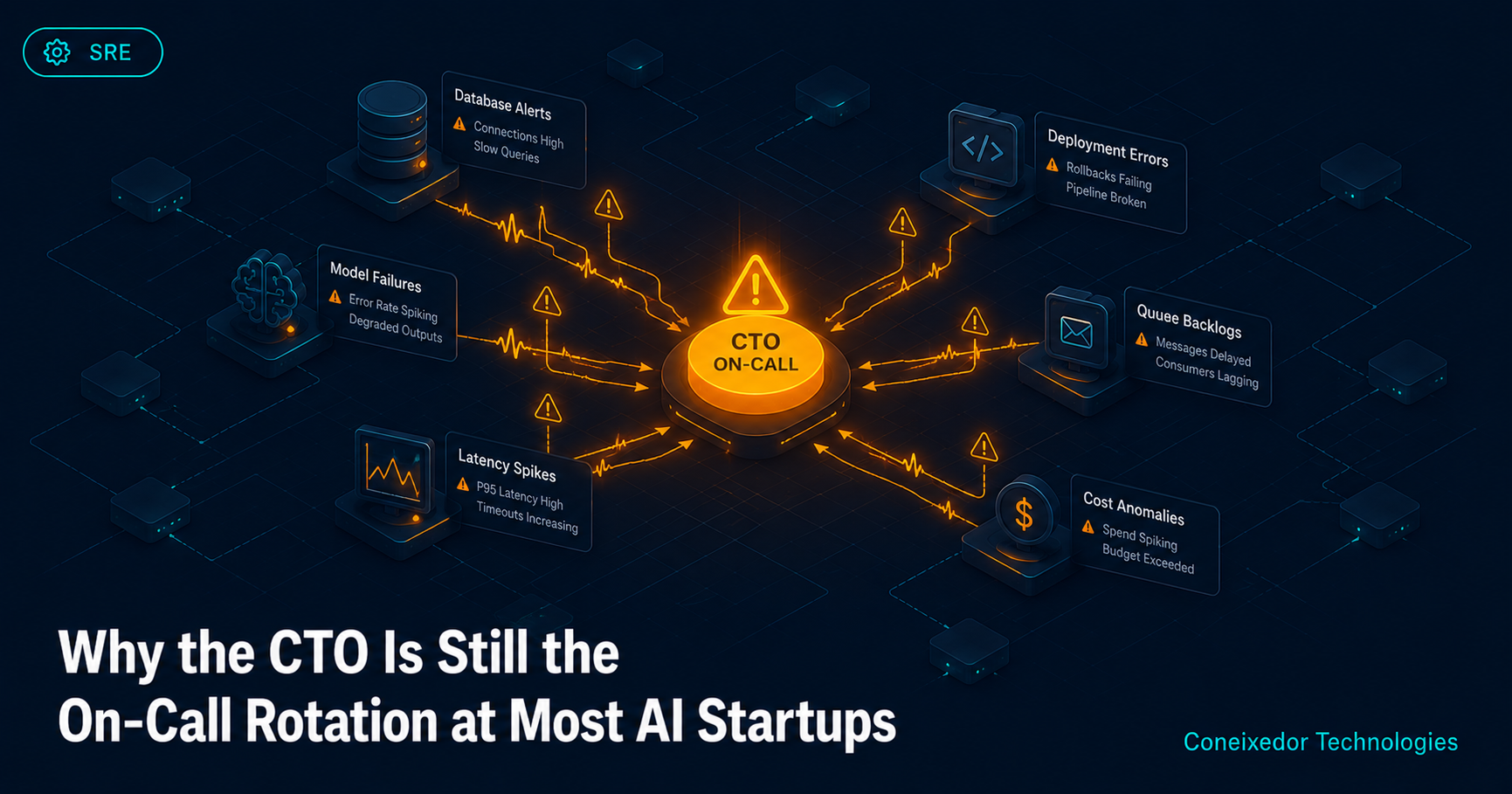
Incident response readiness. Documented runbooks, escalation paths, and mean time to recovery across the most common incident types.
Cost structure analysis. Where infrastructure spend is going, what is idle, and where the highest-impact cost optimization opportunities are.
Scale readiness. Which components will break first under 5x or 10x current load, and what the remediation path looks like before you hit those limits.
What Typically Gets Found?
The findings follow consistent patterns across AI startups at similar stages.
In the seed to Series A range, the most common critical findings are absence of model behavior monitoring, deployment pipelines with no behavioral testing layer, and incident response that depends on founder context rather than documented process.
In the Series A to Series B range, the additional common findings are inference cost structures that will not scale sublinearly, RAG architectures designed for demo conditions rather than production conditions, and observability stacks that monitor infrastructure but not AI behavior.
None of these findings are unique or surprising to the teams that receive them. Most CTOs recognize the gaps as things they knew about and had not yet addressed. The value of the reality check is not discovery. It is prioritization: a clear, evidence-based answer to the question of which problems need to be fixed before they become crises.
What Happens After the Call?
If there is a fit, the roadmap phase that follows the first call has the same discipline: a Current State Assessment, a Findings and Risk picture with each item categorized as Critical, Important, or Good to Have, and a sequenced set of Recommendations for what to fix first. Every decision is explained in business language before anything is built, so CTOs should not need to translate the findings for their board or their investors.
For most teams, the process confirms what they suspected but could not quantify, and surfaces two or three risks they genuinely did not know existed. Both categories are valuable. The risks you cannot name are the ones that show up in due diligence or at 2am.
What Is the Cost of Not Doing This?
The infrastructure debt that takes one conversation to surface and six weeks to remediate today does not stay the same size while you wait. It grows with every engineer you hire, every feature you ship, and every user you add. The check you defer until after the next milestone will cost more after the next milestone than it costs right now.
The free Infrastructure Reality Check call takes thirty minutes. If there is a fit, the roadmap phase goes deeper before anything gets built.
Frequently Asked Questions
An AI infrastructure reality check is a systematic, expert-led review of a startup's production infrastructure covering architecture, deployment pipelines, observability, AI-specific risks, security posture, incident response readiness, cost structure, and scale readiness. It starts with a free 30-minute call and, where there is a fit, continues into a tailored infrastructure roadmap.
The first call is 30 minutes. If there is a fit, the roadmap phase that follows goes deeper into your specific architecture, deployment pipeline, and AI-specific risk surface. Findings are categorized by risk level as Critical, Important, or Good to Have, and presented in business language that can be shared with investors or board members without translation.
The free 30-minute Reality Check call surfaces your top reliability risks and establishes whether there is a fit. If there is, the next phase is a tailored infrastructure roadmap, with every decision explained before anything is built. If there is not, you still leave the call with the risks.
At minimum: before a fundraising round, when engineering team size crosses twenty people, and when monthly active users cross a threshold that materially changes the load profile. Many startups benefit from an annual check as a governance discipline even when no specific trigger event is present.