Most AI startups defer infrastructure investment with the intention of returning to it after the next milestone. That deferred decision compounds. What costs two weeks to fix today costs two months and a crisis to fix later. Here is what the real cost looks like.
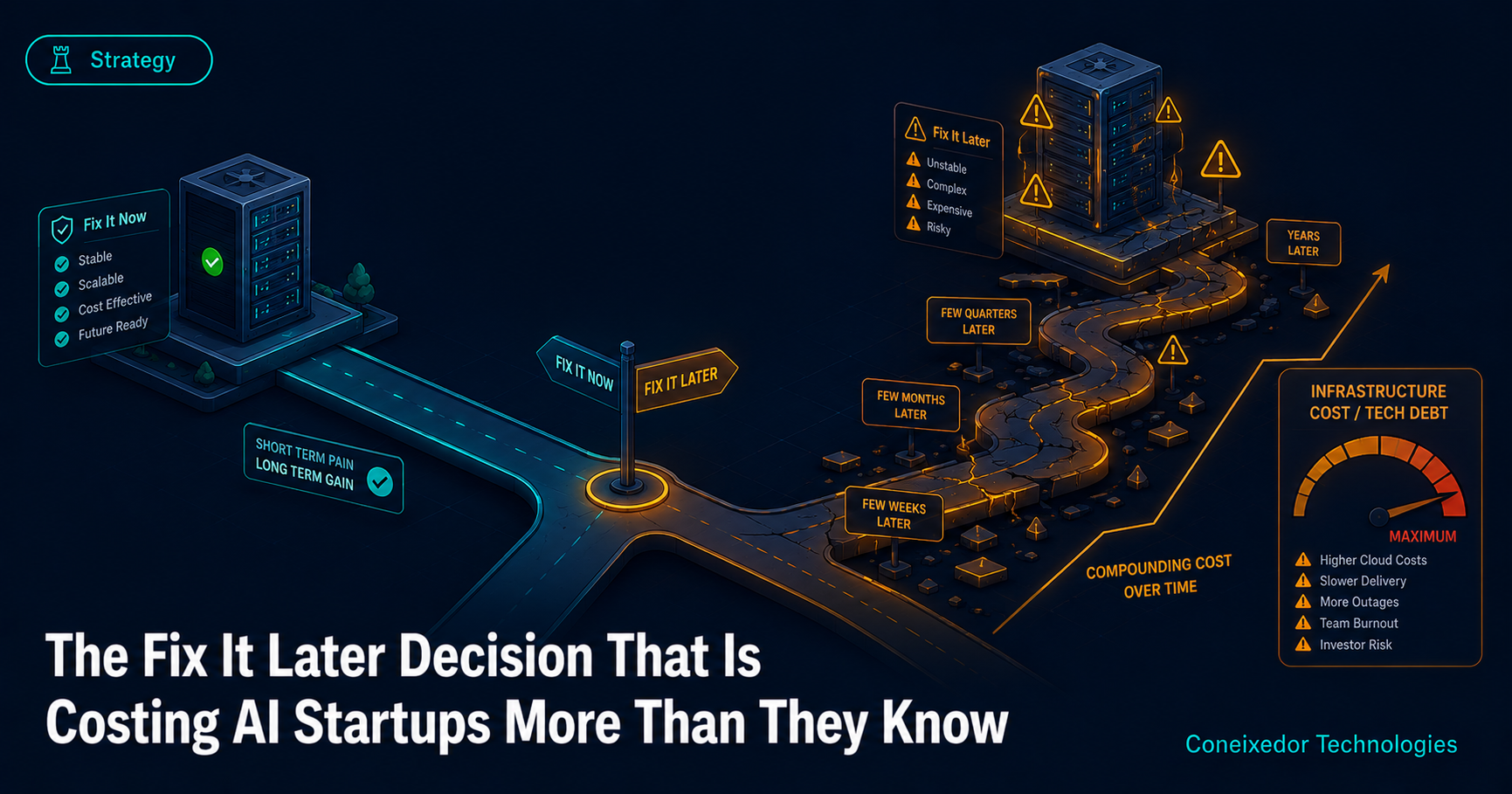
Most AI startups defer infrastructure investment with the intention of returning to it after the next milestone. The deferred decision compounds: what costs two weeks to fix today costs two months and a crisis to fix eighteen months from now. The timing is always wrong by the time the cost is visible.
There is a decision that most AI startups make without making it. Nobody says: we are choosing not to invest in infrastructure. The decision happens through prioritization. The feature takes the sprint. The infrastructure ticket gets pushed to the next cycle. The next cycle has another feature. The backlog grows.
The fix it later belief is the most expensive decision most AI startups never remember making.
It is not negligence. In the early stages of a startup, shipping product is the right priority. Infrastructure investment before product-market fit is frequently premature. The founders who build enterprise-grade reliability into a product nobody uses have made a different kind of mistake.
The problem is that the decision to defer infrastructure does not come with a clear signal that it is time to stop deferring. There is no alert that fires. No moment when the system says: you have now crossed the threshold where your infrastructure debt is compounding faster than your product is growing.
By the time the signal arrives, it usually arrives as something worse.
What Does Infrastructure Debt Actually Cost at Scale?
The most direct cost is incidents. An AI startup with unaddressed infrastructure debt is not a startup that avoids incidents. It is a startup that has not had them yet.
One hour of unplanned downtime costs a Series A AI company between $50,000 and $100,000 in direct and indirect costs. Direct costs include engineering time, customer support overhead, and revenue impact from SLA violations. Indirect costs include the compounding effect on customer trust and the leadership bandwidth consumed by incident response at the executive level.
Coneixedor's annual retainer costs less than two hours of downtime at that rate.
The second cost category is growth friction. Infrastructure debt limits deployment frequency. A team deploying weekly instead of daily is accumulating feature delay relative to a competitor deploying daily. Over twelve months, that gap compounds into a meaningful product capability difference.
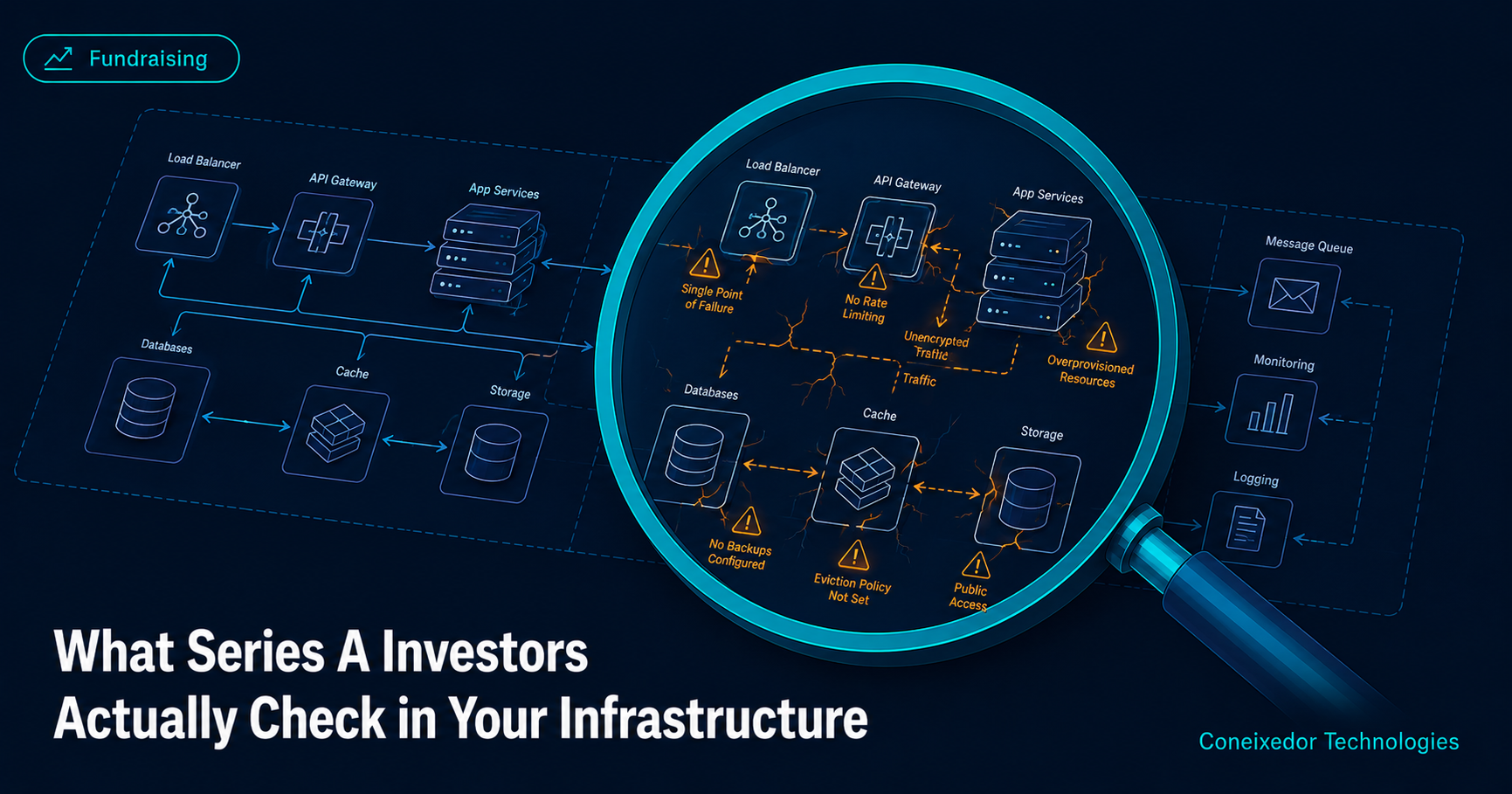
The third cost category is fundraising. Technical due diligence now includes infrastructure assessment at Series A and Series B. Infrastructure debt that would cost six weeks and $15,000 to address before diligence will cost twelve weeks, $30,000, and negotiating leverage to address during diligence.
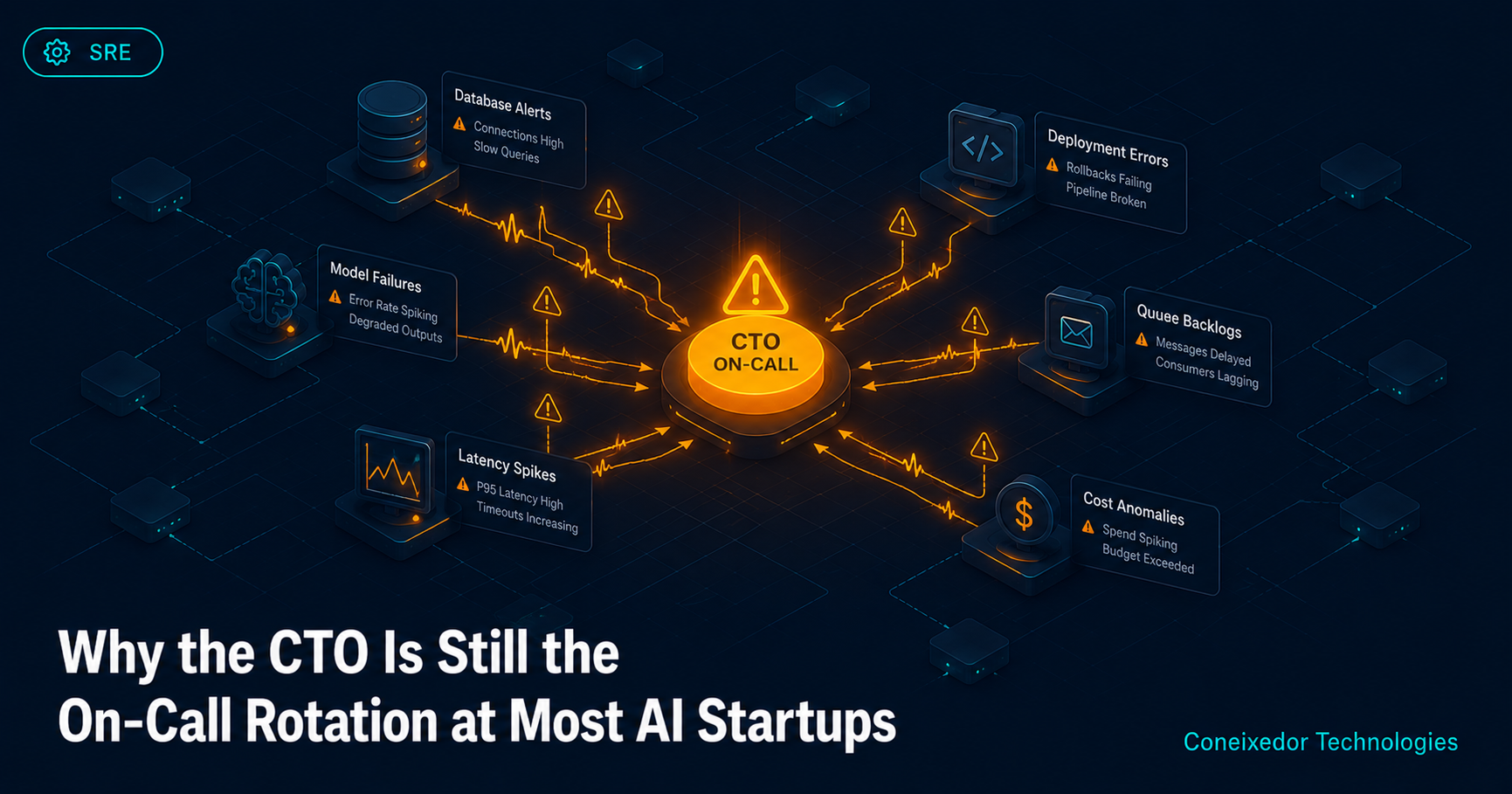
The fourth cost category is hiring. Senior engineers evaluate infrastructure quality when they assess a role. An AI startup with observable infrastructure debt, no on-call documentation, and a CTO who fields 2am incidents is a startup that the best senior engineers join cautiously.
Why Does the Fix It Later Belief Persist Despite These Costs?
Because the costs are not visible until they are significant. The infrastructure debt accumulating in your deployment pipeline does not generate a P&L line. The CTO hours spent on production incidents are not tracked as an opportunity cost. The senior engineer who evaluated the role and chose your competitor instead does not send a rejection note.
The costs are real and compounding. They are just not the costs your monitoring is watching.
The second reason is that the alternative appears expensive at the moment of decision. A $15,000 infrastructure engagement looks large relative to a startup's monthly burn in the early stages. It looks different relative to the cost of the incident it prevents or the fundraising leverage it protects.
The ROI calculation for infrastructure investment is not complicated. Most startups that have been through an incident have already done the math. They just wish they had done it before.
What Does It Actually Look Like to Get the Infrastructure Right?
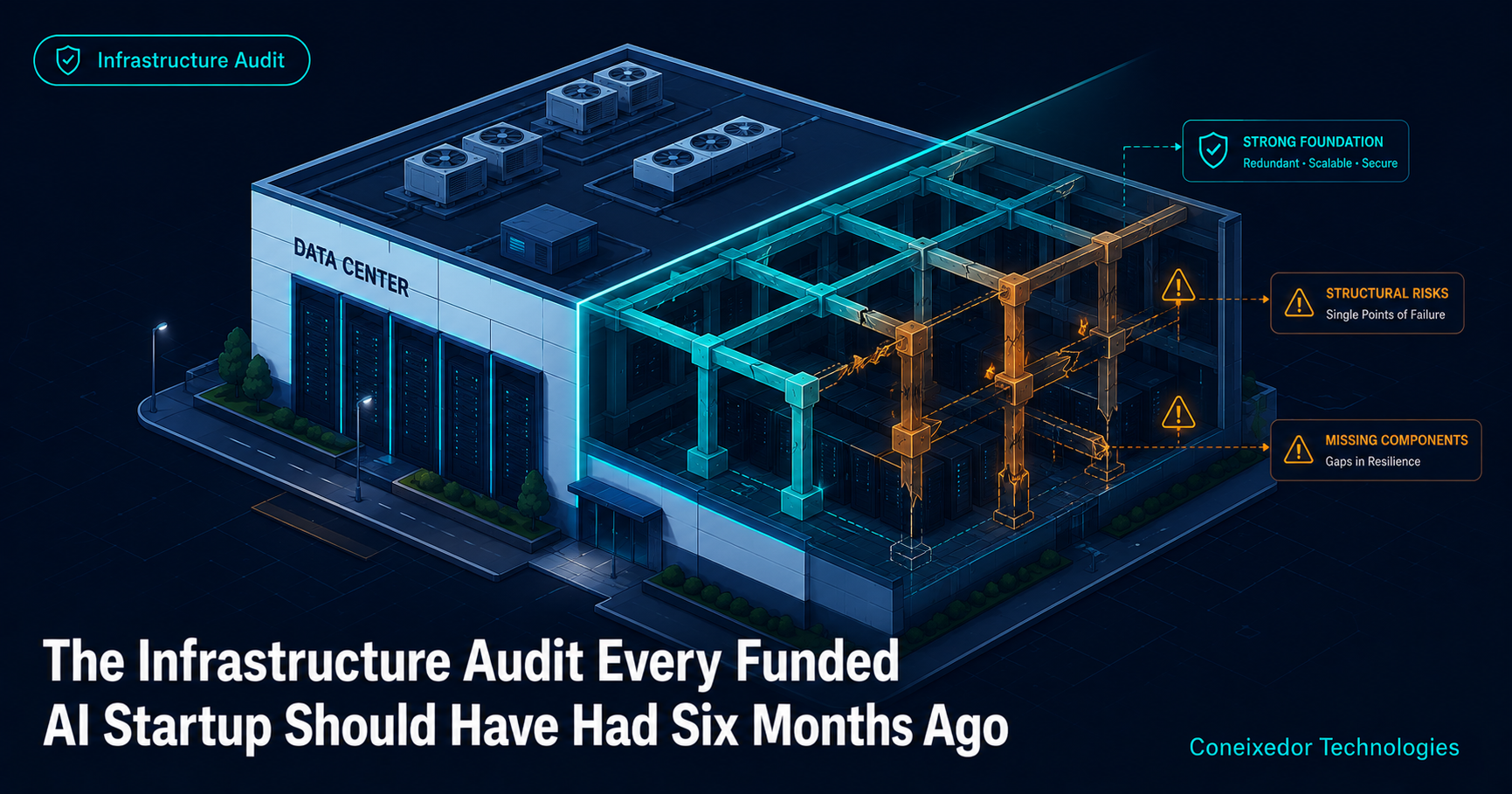
It does not require rebuilding everything. The most common finding in a Coneixedor Infrastructure Reality Check is not that the startup has built the wrong system. It is that the startup has built a good system with specific, addressable gaps. A strong model, a well-structured codebase, and a team with good instincts, sitting on top of a deployment pipeline that generates fear, a monitoring stack with a blind spot for AI behavior, and an incident response process that defaults to the CTO.
Fixing the gaps takes weeks. The risk they carry, left unaddressed, takes years to fully unwind.
BSEduworld, a funded EdTech platform, came to Coneixedor before their first major incident. My team delivered 45% faster deployments, 60% cost reduction, and zero deployment failures since go-live. The CTO did not spend the following twelve months managing infrastructure. They spent it building product.
That is the outcome of addressing the fix it later belief before later arrives.
What Is the Difference Between a Startup That Acts Early and One That Acts Late?
It is not technical sophistication. Most AI startups that defer infrastructure have good engineers. It is not awareness. Most CTOs know which parts of their stack are under-invested. The difference is timing.
Acting early means the team that builds the SRE practice has context from the existing engineers who understand the system. Acting late means building the practice while managing the incident that made it necessary. The engineering hours, the stakeholder communications, and the credibility cost of the incident are sunk. The infrastructure work still needs to happen.
The hire comparison is clarifying. A full-time senior infrastructure expert costs $250,000 in year one and takes six months to find. Coneixedor is operational in week one at half the monthly cost. For a funded AI startup at Series A, the comparison is not between spending and not spending. It is between spending now at lower cost and spending later at higher cost with more at stake.
Book Your Free Infrastructure Reality Check The call is thirty minutes, no pitch. The infrastructure debt that is visible to you now does not stay the same size while you wait.
Frequently Asked Questions
Infrastructure debt is the accumulated technical risk from deferred investment in deployment pipelines, monitoring, incident response, observability, and scalability. Unlike feature debt, infrastructure debt does not manifest as a visible product gap. It manifests as incidents, deploy fear, CTO-level on-call dependency, fundraising complications, and senior hiring friction.
The cost varies by stage but includes direct incident costs, leadership time spent on reactive operations, deployment frequency reduction, fundraising leverage loss, and senior hiring friction. One hour of unplanned downtime at Series A costs $50,000 to $100,000 in direct and indirect impact. Coneixedor's annual retainer costs less than two hours of downtime at that rate.
Before the incident that makes it visible. The window between product-market fit and Series A is the highest-value investment period for infrastructure: the product is validated, the team is growing, and the cost of addressing debt is lower than it will be at the next stage. Addressing infrastructure debt before fundraising also protects negotiating leverage.
An Infrastructure Reality Check that produces a clear, prioritized risk picture. This converts your team's informal awareness of infrastructure gaps into an evidence-based picture that can guide investment decisions and investor conversations. The free Coneixedor Infrastructure Reality Check call takes thirty minutes.